
Ongoing third-party funded projects at IKSA
TarasLAB
Imagining the future in post-industrial Taranto, Italy
Hard Facts
project duration: January 2026 - December 2027
funding: Marie Skłodowska-Curie Actions
fellow: Letizia Bonanno
project lead: Tatjana Thelen

-
project description
The port city of Taranto has grown in the shadow of ILVA, the largest steel plant in Europe. Since the 1960s, ILVA has provided the people of Taranto with livelihoods and hopes for prosperous futures but also contributed to the city’s environmental degradation and public health crisis. In 2012, ILVA was seized after a court's preliminary hearing deemed the steel plant responsible for Taranto's public health and environmental crisis. To reduce polluting emissions, the blast furnaces were shut down and the steel workforce faced layoffs. A socio-economic crisis ensued, adding to the environmental and public health crisis. Since then, the future of Taranto has been on hold: the state's promises to implement environmental policies and nationalise the plant have never materialised. Exploring the tensions between labour and environment, TarasLAB asks: How can the future be imagined and reclaimed when people's livelihoods mostly depend on what is likely to threaten their lives? To answer this question, it combines ethnographic and collaborative visual methods to engage the research participants in a collective project of multimodal storytelling, which will unfold through and culminate in the co-production of an ethnographically informed graphic novel.
TarasLAB leverages anthropological theories and methods to analyse timely issues of interests to both society and policymakers: in addressing Tarantini’s concerns about their future, the project aligns its objectives with the European challenges to make Europe sustainable and secure by 2050. The project's results will add to scholarly debates on sustainable futures in the European semi-periphery while offering a unique contribution on the epistemological affordances of Graphic Anthropology.
Dreamscapes
Hard Facts
project duration: January - December 2026
funding: FWF Science Communication
project lead: Suzana Jovicic
co-PI: Sanderien Verstappen, Barbara Göbl (Center for Teacher Education)
team: Sophie Wagner
-
project description
Addiction is often viewed from a medical or psychological perspective as a disease. Dreamscapes, however, goes a step further by asking: what does addiction tell us about the social conditions in which it arises? Where does addiction begin, and where does it end – especially in the context of newer forms such as media or internet addiction? The project shows that dependencies, ranging from alcohol and opioids to digital media, reflect not only individual struggles but also broader social developments and problems. Building on the FWF-ESPRIT project Making Sense of Smartphone Addiction, Dreamscapes invites us to explore addiction beyond diagnoses, categories, and prohibitions – placing it within sociocultural, political, and historical contexts and questioning simplistic causal explanations.
At the heart of the project lies the question of what forms of dependency reveal about our increasingly attention-driven worlds. Based on ethnographic research in an Austrian addiction clinic, the project explores how people experience and cope with addiction, relapse, stigmatization, and social pressures. At the same time, Dreamscapes highlights the ambivalence and persistence of these escapist spaces: they can be both destructive and relieving.
Through theatre, storytelling, and interactive formats, the project translates anthropological insights into tangible experiences. A collaboratively developed theatre piece, podcast series, digital installations, school workshops, and a public flash mob create new spaces for exchange and reflection. In doing so, Dreamscapes reduces the distance between “patients” and “non-patients,” emphasizing shared human experiences rather than rigid categories. The goal is not to provide final answers or recommendations, but to return the questions emerging from research to the public, encouraging deeper reflection on addiction in an era of constant connectivity.
The Global Hospital
Reproducing healthcare through entanglements of labour, mobility and knowledge in Switzerland and Austria
Hard Facts
project duration: January 2026 - December 2029
projekt lead at IKSA: Janina Kehr
team am IKSA: Mara Köhler
project partners: Fachbereich Gesundheit Berner Fachhochschule, Transkulturelle Studien SHSS Universität St. Gallen
-
project description
During COVID-19, hospitals across the globe were sites of care and calamity. As key pillars of pandemic response, hospitals revealed both the paramount importance of clinical care in treating patients but also the crisis hospital institutions and their workers face in changing healthcare systems. Ongoing precarisation of hospital work, an increasing reliance on migrant labour, and the outsourcing of services and maintenance work render healthcare provision fragile. Labour in the hospital has thus become a source of much political and economic concern.Our project seeks to offer a novel conceptualisation of hospitals as gendered, globalised spaces of more-than-medical labour and knowledge. Our hypothesis is that labour, mobility, and knowledge are entangled in the reproduction of medical care beyond the narrow practice of medical work, but the effects of this entanglement need to be better understood. Hospital research often favours medical professionals and patients. However, the clinical encounter is made possible by mostly female care workers (nurses and healthcare assistants) and maintenance staff (kitchen and cleaning workers) who mediate between practitioners and patients in addition to laying the very groundwork for nursing and medical care to take place. To fill this gap, we ethnographically investigate care and maintenance workers’ everyday labour, migration trajectories, and funds of knowledge in Switzerland and Austria. By focusing simultaneously on both groups, we go beyond the current state of the art that follows professional boundaries. Inspired by feminist works on social reproduction, we combine three largely disconnected bodies of literature in novel ways: hospital ethnography; the anthropology of healthcare migration and global care chains; and the anthropology of knowledge practices and funds of knowledge. We conceive of care and maintenance staff as ‘reproductive workers.’ Our innovative approach thus goes beyond the common-sense framing of labour in the hospital as mainly medical or paramedical work or portraying hospitals as national institutions. Instead, we ask how transnationally entangled forms of labour, mobility, and knowledge beyond the medical/non-medical divide, national boundaries, or hospital walls reproduce medical care in gendered, diverse, and globally refracted ways, albeit with local specificities fashioned by regional and national health, labour, and migration regimes.Epistemologically, the project approaches the global hospital as a gendered, more-than-medical space of entangled labour (care and maintenance work), mobilities (care work migration, diaspora labour, international recruitment), and knowledge (in/formal knowledge practices and embodied cultural knowledge). Methodologically, the project will combine multi-sited with local hospital ethnography and the funds of knowledge approach, as well as participatory design research. This methodological orientation and triangulation of (expert) interviews, multi-sited ethnographic observations, informal conversations, home visits, legal and policy analysis, and participatory workshops with care and maintenance workers allow for a new understanding of hospitals as central nodes of gendered global care chains where more-than-medical labour and diverse knowledge funds intersect in the everyday reproduction of healthcare.Four subprojects will focus comparatively on hospitals in Switzerland and Austria, two bordering, intersecting, but also contrasting poles of European healthcare regimes (public vs private health insurance), as well as two contexts of European (Post-Yugoslav region) and extra-European (Colombia) staff recruitment. Our project will thus contribute to understanding the global entanglements of labour, mobility, and knowledge in Swiss and Austrian hospitals from the workers’ perspective as well as their effects abroad.
HPVienna
Pioneering a Transdisciplinary Urban Surveillance System for Human Papilloma Virus with Vulnerable Communities
Hard Facts
project duration: March 2025 - February 2027
funding: WWTF
project lead at IKSA: Lisa Lehner
project partners: Medical University Vienna, TU Vienna
website: https://hpvienna.at/

-
project description
In 2023, Austria extended its national vaccination program for Human Papillomavirus (HPV), joining WHO’s call to eliminate cervical cancer and expanding its goals with a gender-neutral policy. Yet, the lack of any HPV surveillance system poses severe challenges in assessing the impact of vaccination, the evolutionary consequences on circulating HPV genotypes, and the basic sociality of HPV within dense urban environments. This project proposes a novel transdisciplinary approach which integrates sequencing-based genomic epidemiology, mixed-method social science and public health research, and agent-based modeling to tackle these interconnected challenges. We will map viral population dynamics onto urban social dynamics, unveiling transmission networks and contributing to prevention of HPV-linked cancers. Partnering with the NGO and clinic Ambermed that supports patients without health insurance in Austria, volunteer HPV swabbing will be enhanced through social participatory methods, and complemented by a novel pipeline to detect population-wide circulating HPV genotypes from wastewater to test the risk of high-impact variants and indirect effects of vaccination. All novel and complementary evidence will be synthesized to yield a transmission model for the whole Viennese population, intervention scenarios, and a policy blueprint with recommendations and tailored measures. Our pioneering approach tackles existing socioeconomic inequalities and gender disparities with an additional focus on boys and men. This transdisciplinary strategy pushes the boundaries of OneHealth in practice, with the potential of serving as a prototype for effective prevention and multi-system surveillance of infectious diseases in the urban environment more generally.
Enacting (digital) citizenship from below
A study on care and the uses of digital infrastructure by refugees in Bosnia and Herzegovina
Hard Facts
project duration: March 2025 - February 2028
funding: FWF, Principal Investigator Project
project lead: Monika Palmberger
-
project description
This research investigates the experiences of refugees at the EU's external borders (between Bosnia and Croatia), examining their informal support and solidarity networks both inside and outside refugee camps, their journeys into EU territory, and their civic engagement through digital infrastructure. Although an important route for refugees into Europe leads through Bosnia and Herzegovina, the situation there remains significantly under-researched. Digital infrastructure is not only essential for migrants to coordinate care and support but also influences how they engage in civic activities and potentially claim rights and recognition in often new and innovative ways.
This ethnographic research is one of the first anthropological studies situated in Southeast Europe within this context. It will provide insights into how digitalization shapes refugees' experiences – influencing their mobility, access to resources, and social connections – while being embedded in contemporary migrant governmentality through digital surveillance, border control, and the role of online networks in facilitating care, transnational placemaking, and acts of citizenship from below.
Ageing and Subjectivity in a Time of 'Multiple Crises'
Narrating Crises in Later Life - a Comparative Ethnographic Study Between Singapore and Vienna
Hard Facts
project duration: Jan 2025 - Dec 2027
funding: FWF, Principal Investigator Project
project lead: Monika Palmberger
team: Barbara Götsch, Chloe Ng
partner institutions: University of Massachusetts Amherst; Oxford Brookes University; Maastricht University; Center for Interdisciplinary Research on Aging and Care, University of Graz; Leiden University; Austrian Academy of Sciences; Aging Institute, National University of Singapore; University of Frankfurt; Asia Research Institute, National University of Singapore
-
project description
In the early 2020s, exceptional government measures across Europe, Asia, and beyond have been implemented to contain the COVID pandemic and to protect those deemed most at risk. Older adults, in particular, have become the focus of these regulatory interventions. Moreover, recent years have witnessed the emergence or exacerbation of further burdens, threats and uncertainties likely to affect older persons such as high inflation, the energy crisis, global warming, and armed conflicts. This project seeks to understand how crises are experienced and narrated in later life and what role social relations and the wider cultural and political environment play. We address this question by comparing the experiences of older adults (aged 70 and over) in Singapore and Vienna.
This project offers a unique comparative perspective that challenges conventional interpretations of crisis experiences. The project is grounded in a comparative and experience-near level of narrative analysis based on 27 months of multi-sited ethnographic fieldwork in retirement homes and senior centres in Singapore and Vienna. Long-term participant observation is complemented by in-depth analysis of life stories and social interactions as well as by selected collaborative, creative, and digital methods.
Theoretically and methodologically innovative, this project integrates research on ageing and subjectivity by examining individual agency in later life within distinct local political regimes of care and protection. In doing so, this take on social relations not only theoretically integrates relations of proximity and social connectedness but also relations with institutions of care and the state and their intermediaries, and ways of responding to specific biopolitical subjectifications. Ultimately, the study aims to theorize what it means to live one's later life in times of crisis.
LIFE Pannonic Salt
Hard Facts
project duration at IKSA: October 2024 - July 2028
funding: EU-LIFE-Fonds
project lead at IKSA: Gertraud Seiser
project coordination: Nationalpark Neusiedler See – Seewinkel
-
project description
Im Projekt LIFE Pannonic Salt arbeitet der Nationalpark Neusiedler See – Seewinkel, das Land Burgenland (Wasserwirtschaft und Biologische Station Neusiedler See), der WWF Österreich und die TU Wien gemeinsam an der Verbesserung des Erhaltungszustands bedrohter Salzlebensräume.
Die Sodalacken des Seewinkels sind auf europäischer Ebene einzigartige Binnen- Salzlebensräume und beherbergen eine hochspezialisierte Flora und Fauna. Auch für den Naturtourismus und die Landwirtschaft in der Region spielen sie eine wichtige Rolle. Die Absenkung des Grundwasserniveaus führt zum Verlust des Salztransportes an die Bodenoberfläche. Keine der heute noch existierenden Lacken kann ohne umfangreiche Restaurationsmaßnahmen erhalten werden.
Daher wurde im September 2023 das Projekt LIFE Pannonic Salt gestartet. Ziel des Projektes ist es, den Zustand der noch bestehenden Sodalacken zu verbessern. So sollen diese Lebensräume und ihre einzigartige Artengarnitur für zukünftige Generationen erhalten werden.
Durch gezielte Rückstaumaßnahmen entlang des Seewinkel-Hauptkanals soll der für die Funktionalität der Sodalacken erforderliche Grundwasserstand wieder erreicht werden. Parallel dazu wird der Hochwasserschutz tiefergelegener Siedlungsgebiete in Apetlon verbessert. Auch soll gemeinsam mit der Landwirtschaft eine klimafite, wasserschonende, landwirtschaftliche Zukunft erarbeitet werden.Projektteil sozio-ökonomisches Monitoring in Kooperation mit dem IKSA
Das Ziel dieser mehrstufigen sozialanthropologischen Studie besteht darin, die lokalen Interessengruppen in die weitere Entwicklung des Erhaltungsmanagements im LIFE-Projekt „LIFE Pannonic Salt“ einzubeziehen. Mit Hilfe von qualitativen und quantitativen Erhebungen sollen grundlegende Informationen über die Beziehungen der Apetloner Bevölkerung zum Grundwasser und dessen Auswirkungen auf das gesellschaftliche und wirtschaftliche Gefüge der Region erhoben werden. Der Titel „Was denkt die Apetloner Bevölkerung über das Grundwasser?“ ist bereits die zentrale Forschungsfrage, über die Erfahrungen, Wissen, Einstellungen, Werte und Erwartungen zu Projektbeginn gesammelt und in den Kontext der aktuellen gesellschaftlichen und ökonomischen Entwicklung gesetzt werden. Aus einem quantitativen Zwischenschritt erhoffen wir uns Aufschlüsse darüber, wie häufig qualitativ erhobene Einstellungen und Verhaltensweisen in der Bevölkerung vorhanden sind. Das Gesamtprojekt „LIFE Pannonic Salt“ sieht umfangreiche technische und bauliche Maßnahmen vor, die Grundwassersituation vor allem für die prioritären Sodalacken und Salzlebensräume zu verbessern und dabei Bedürfnisse der lokalen Bevölkerung und Landwirtschaft zu berücksichtigen. Das Ziel ist Naturschutz mit der Verbesserung der Lebensqualität und der wirtschaftlichen Situation der Region zu verbinden. Gegen Projektende des Gesamtprojekts wird daher wieder qualitativ untersucht, ob sich Wissen und Einstellungen der Apetloner Bevölkerung verändert haben und wie die gesetzten Maßnahmen wahrgenommen wurden. Daraus sollen Lehren gezogen werden einerseits für die Durchführung ähnlicher Renaturierungsprojekte, andererseits für die AFTER-LIFE Strategie der Sodalacken über das Projektende hinaus, deren nachhaltiger Erhalt gesamtgesellschaftliche Anstrengungen aller Stakeholder bedarf. Des weiteren können die Aussagen der Interviewten hilfreich für die Planung der Siedlungs- und Infrastrukturentwicklung der Gemeinde Apetlon sein.
Governing Quakerty in a Post-Disaster Türkiye
Hard Facts
project duration: September 2025 - August 2028
funding: Marie Skłodowska-Curie Actions
fellow: Umut Kuruüzüm
project lead: Ayse Caglar
-
project description
This academic research, entitled 'Governing Quakerty', focuses on the intersection of 'quake' and 'property', and sheds light on property governance in a post-disaster context, particularly in and around the recently quake-affected area of Antakya, in Türkiye, where the research is focused. The central research question is: How does property governance unfold in the earthquake-affected city, and what are the governmental, communal, and individual strategies implemented to deal with land and property loss, appropriation, and the ensuing processes of re-entitlement during the reconstruction period? The research examines the dynamics of disaster property in a post-quake context, encompassing both the collapse (the process of alienation) and reconstruction (the process of re-entitlement) phases, by investigating (a) the disposal, recycling and governance of earthquake-damaged property and personal belongings within collapsed or damaged buildings; (b) the process of post-disaster property claims and strategies for re-entitlement and ownership during relief and reconstruction efforts. By examining the circulation of property along the processes of loss, recycling, reconstruction and re-entitlement in the context of a destroyed urban landscape, in conjunction with legal and institutional contexts and policies, as well as the strategies and experiences of affected individuals, this scholarly investigation will make a critical contribution to the development of an effective approach to property governance in quake-affected areas, thereby assisting resilient and inclusive post-disaster property recovery efforts.
EMCY - Enabling migrants to cycle
Hard Facts
project duration: September 2024 - August 2026
funding: FFG
project partners: stape e.U. - Urban Consulting, klarFakt e.U., Institut für Verkehrswissenschaften (TU Wien)
project leader at IKSA: Sanderien Verstappen
team at IKSA: Helen Vaaks
-
project description
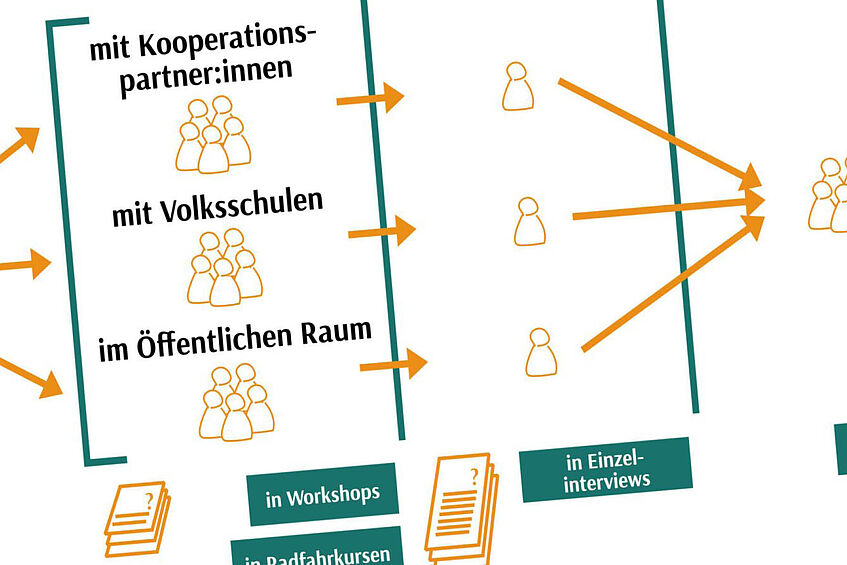
How can the interests of people with a migration background be represented more equitable in research? This question is being researched through the topic of cycling in everyday life: What obstacles do migrants and their children face in using cycling as a means of transport in Vienna? The EMCY project aims to answer this research question under the premise of an intersectional understanding of gender. There, gender is an aspect of social inequality also including economic conditions, education, age, and the capacity to be mobile.
The aim of the project is to investigate whether and by utilising which type of survey method reliable results can be obtained on migrant attitudes and needs. Obstacles shall be identified that prevent migrants from cycling in everyday life. The target group is residents of Vienna who have migrated from outside the EU of 1995, focusing on parents with children of primary school age. This approach is analogous to the FreiRad project and enables a comparison of the research results in order to confirm or expand the recommendations for action developed there. For the survey, the plan is to cooperate with institutions from the migrant integration sector that are locally anchored. Based on the knowledge gained, a practical test (e.g. tailor made cycling courses) will be developed in order to test possible support measures for migrants.
ARCA - Biocultural Heritage in Arctic Cities
Resource for Climate Adaptation?
Hard Facts
project duration: April 2024 - March 2027
funding: BMBWF for Belmont Forum
project leader (at IKSA): Olga Povoroznyuk
team (at IKSA): Peter Schweitzer (Co-PI), Klara Gmeinbauer (project assistant)
partner institutions: George Washington University, USA (consortium lead), Nancen Environmental and Remote Sensing Center, Norway; Art Science International Institute, France; Indigenous, environmental and arts NGOs in the USA and Norway
more about the project on the KSA website | ARCA dissemination portal
-
project description
ARCA is a Belmont Forum consortium project consisting of social and natural scientists and artists. It’s main research question is: “How can biocultural heritage embodied in Arctic urban green spaces and natural landscapes serve as a resource for climate adaptation?" It combines the methods of social anthropology, climate science, remote sensing, human geography, arts and community engagement to co-create publicly accessible and place-specific science and arts products. The Vienna anthropology team is focusing on the role of local and Indigenous ecological knowledge and human-nature relations embodied in urban green spaces and landscapes in environmental adaptation and cultural resilience. Our ethnographic research sites include Anchorage in the USA and Kirkenes in Norway. Together with research partners and local communities, our team co-organizes collaborative workshops, including presentations, artistic interventions, participatory mapping and discussions.
Performing as the expert
urban activists’ roles and identities online and offline
Hard Facts
project duration: March 2024 - February 2027
funding: Marie Skłodowska-Curie Actions
fellow: Christoph Fink
project lead: Sanderien Verstappen
-
project description
Urban activists advocate for a more just distribution of physical urban space away from motorised traffic towards sustainable, humanscale cities. Some activists act on their own behalf, as concerned or affected residents; others choose to perform specific roles, for instance, as topic experts. This research investigates which roles urban activists perform, how they choose a role, and which motives influence the choice. It asks whether activists' performativity can shift the political landscape in their favour, and how performed roles are perceived by politicians, lobby groups, and the public.
The project employs a mixed-method approach that combines quantitative and qualitative methods including computational linguistics, social network analysis, digital ethnography, and visual ethnography. The visual ethnography consists of video recordings that investigate activists' performativity on the streets of Austria, Finland, and Ecuador. This on-site research is complemented by digital research on activists' performed roles in online spaces.
ANTHROFUTURE
The anthropology of the future: An art world perspective
Hard Facts
project duration: January 2024 - December 2028
funding: ERC: European Research Council
project leader: Manuela Ciotti
project team: Furqan Ghani, Rugun Sirait
website: https://www.anthrofuture.com/
-
project description
In the midst of today’s multifaceted crises – social, ecological, and exacerbated by COVID-19 – the future remains a neglected area of anthropological exploration. Urgent challenges demand fresh perspectives on what lies ahead, yet existing studies often reflect the concerns of the Global North, overlooking the diversity of human experience and potential futures. In this context, the ERC-funded project ANTHROFUTURE spearheads a paradigm shift in anthropological inquiry. By examining the pandemic-induced acceleration of future scenarios into the present, the project aims to unravel the complexities of our tomorrow. This groundbreaking endeavour focuses on the dynamic interplay between the pandemic, the art world, and the Global South, offering innovative insights into the shaping of decolonised future narratives and possibilities.
ILLUQ
Permafrost-Pollution-Health
Hard Facts
project duration: January 2024 - December 2027
funding: European Commission - Horizon Europe
project leader at IKSA: Peter Schweitzer
team at IKSA: Susanna Gartler, Alexandra Meyer, Olga Povoroznyuk
-
project description
Permafrost underlies 22% of the Northern Hemisphere's exposed land surface and is thawing at an alarming rate as a direct consequence of climate change. Permafrost thaw releases large quantities of organic matter and contaminants into the environment. Contaminants, including heavy metals, persistent organic pollutants and microbiological agents locked in permafrost, are a risk for both human and animal health. In addition, permafrost thaw dramatically impacts infrastructure in local communities with wide-ranging consequences for health, economy, and society. Yet the social, physical and health components of permafrost thaw have traditionally been studied in isolation, leading to inadequate policy options that ignore the holistic nature of the threat. There is a need for an integrated and participatory approach to the complex issues at the overlap between climate change, permafrost thaw, infrastructure damage, contaminants, health and well-being and for solutions founded on the cultural, natural and social frameworks of local communities. ILLUQ is an interdisciplinary project rooted in participatory research with local stake- and rightsholders. Its mission is to tackle this need by providing the first holistic approach to permafrost thaw, pollution, One Health and well-being in the Arctic and delivering timely products on the risks from contaminant release, infrastructure failure and ecosystem changes to stakeholders. ILLUQ's endeavor is a direct answer to the pressing needs of communities on potentially disappearing permafrost. It targets the missing link between studies performed by scientists, engineers and consultants in local communities and solutions with local stake- and rightsholders focusing on the long-term implications of decision-making in the context of permafrost thaw, a time frame generally overlooked in existing governance frameworks.
Less is More
De-Prescribing Pharmaceuticals for Patient Safety and Sustainable Public Health
Hard Facts
project duration: May 2023 - April 2026
funding: WWTF
project lead: Janina Meillan-Kehr
Co-PI: Lisa Lehner (at IKSA), Igor Grabovac (MedUni Wien)
website: https://health-matters.univie.ac.at/projects/lessismore/

-
project description
Today, the right to health is often enacted as a right to access pharmaceuticals. This pharmaceuticalization of public health creates both opportunities for relief and new risks for patient safety and sustainability such as overmedicalization, waning effectiveness, and iatrogenic harm. In health policy making, a “less is more” approach of de-prescribing has become part of quaternary prevention with optimization of services at its core. Existing policies focus on guidelines for providers and indirect user regulation. Yet, little is known about provider and user experience or circulation pathways–pharmaceuticals’ “cultural efficacy”–that could inform a more context-sensitive, evidence-based policy approach.
Making Sense of Smartphone Addiction
Hard Facts
-
project description
Although smartphone addiction is not officially recognised as a psychiatric disorder, it is a popular topic of public discourse around the world, especially in relation to the "zombified" young people who seem to be glued to their smartphones. To date, however, research on smartphone and internet addiction has been limited: It is often based on quantitative surveys produced by researchers and mental healthexperts who rather arbitrarily and top-down determine how much time spent with a smartphone is problematic. Moreover, such studies are usually conducted with college students in English-speaking countries and assume that smartphone users' behaviour is universal, regardless of social and cultural differences, historical attitudes towards media and patients' perspectives.
This project thus aims to address the urgent need for additional, qualitative and more nuanced research on this topic, to take into account social and cultural differences, and to consider the perspectives of those affected by smartphone addiction or related phenomena such as internet and gaming addiction. To this end, the project focuses on how affected young people experience and conceptualise smartphone addiction themselves, particularly in relation to the issues of guilt and self-control.
In order to capture their perspectives, the study will involve extensive fieldwork in an Austrian clinic specialising in smartphone, gaming and internet addiction, conducted by a social and cultural anthropologist based at the University of Vienna. During several months, the researcher will spend time with patients and medical professionals, participate in various activities and conduct interviews. The project will not only explore how smartphone addiction is conceptualised by young people and mental health professionals but will also actively engage young people in discussions about the phenomenon by creating a collaborative artwork that expresses their views. This will include participatory workshops involving patients, mental health professionals, digital interface designers and artists who will enable the creation of a collaborative audio-visual work to be publicly exhibited.
The project is situated at the Department of Social and Cultural Anthropology at the University of Vienna. Its interdisciplinary advisory board includes researchers from the Maynooth University (Ireland), Free University Berlin (Germany), Weißensee Academy of Art Berlin (Germany), Masaryk University (Czech Republic) and RMIT University Melbourne (Australia).
Snow2School
An interdisciplinary approach for recording changes in snow in Greenland and Austria
Hard Facts
project duration: 2023-2025
funding: OEAD Sparkling Science
project leaders: Wolfgang Schöner (Universität Graz), Peter Schweitzer (at IKSA)
team at IKSA: Theresa Gusenleitner, Sophie Elixhauser
website: https://www.snow2school.com/
Photocredit © Schöner
-
project description
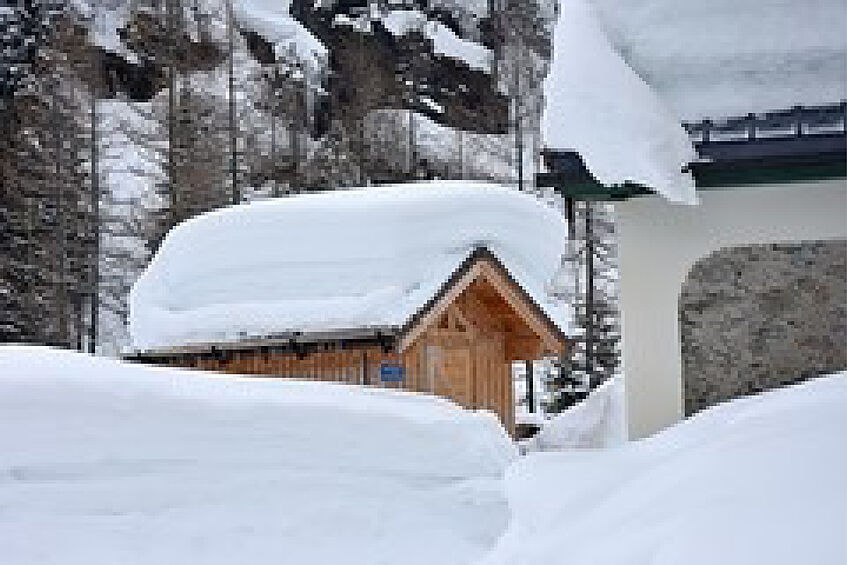
Snow is a key variable of climate change, making it and its associated impacts clearly visible. The changes in snow cover over the last 150 years or so are well documented for the Alps from measurements. However, the situation in Greenland is completely different. Although snow also plays a central role for the population there, hardly any measurements are available for this huge island.
This research gap motivates the overall research goal of Snow2School, namely to be able to better quantify changes in snow conditions using the example of Uummannaq (Greenland), by means of a new reconstruction method based on photographs, which is being developed and tested for Eisenerz (Austria, Alps). At the same time, Snow2School aims to generate a better understanding of the impact of snow changes (against the background of climate change) on the lives of people in Greenland and Austria. Snow2School thus pursues an interdisciplinary research approach with strong Citizen Science support.
INFRANORTH
Building Artic Futures: Transport Infrastructure and Sustainable Northern Communities
Hard Facts
project duration: January 2021 - December 2025
funding: ERC: European Research Council
project leader: Peter Schweitzer
team: Ria-Maria Adams, Philipp Budka, Alexandra Meyer, Olga Povoroznyuk, Alexis Sancho-Reinoso (until 2024), Katrin Schmid, Elena Davydova
student collaboration: Ilya Krylov
project administration: Susanna Heubusch, Cristóbal Adam Barrios (outreach activities)
website: https://infranorth.univie.ac.at/
-
project description
The “new Arctic” is attracting global attention for a variety of reasons, including geopolitics, militarisation, resource extraction, wilderness tourism, and calls for environmental protection in the face of rapid climate change. Many of these activities necessitate the construction or upgrading of transport infrastructures in this relatively remote, inaccessible and scarcely-populated part of the world. While these large-scale infrastructures are mostly sponsored by outside interests, they can have profound impacts on local residents.
We propose to focus on how residents of the Arctic, both indigenous and non-indigenous, engage with these infrastructures, and to examine the intended and unintended consequences these projects have on their lives.
Our challenge is to understand whether existing and planned transport infrastructures will support permanent human habitation and sustainable communities in the Arctic, or whether they will strengthen a trend of substituting permanent residents with “temporaries” like shift workers, tourists and military personnel. In addressing this challenge, we adopt a relational affordance perspective, which will document the material and non-material entanglements of local residents and transport infrastructures in three distinct arctic regions (Russian Arctic, North American Arctic, European Arctic).
Our approach combines ethnographic fieldwork with mapping exercises and archival research. Our project team of anthropologists and geographers will use quantitative population data to upscale to the regional level, and regional patterns will be contrasted and compared to reach conclusions on the panarctic level.
We will use interactive scenarios to collect input and to develop decision options. Our overarching research question – What is the role of transport infrastructures in sustaining arctic communities? – is of urgent relevance on both theoretical and practical levels, and by addressing it we will contribute locally informed results to critical conversations about arctic futures.